
How Thai Massage Supports Pain Relief: Expert Care You Can Trust
Living with chronic pain or stiffness can make everyday tasks feel harder and more frustra...


Restore, recharge, and feel like yourself again. Massage therapy benefits aren’t just about relaxation; it can ease sore muscles, release tension you carry from daily stress, calm your nervous system, and enhance circulation so your body recovers fully over time.
In this blog, we’ll break down the science behind these effects, explore which massage styles deliver the strongest results, and show how consistent care leads to long-term wellness.

Massage therapy offers natural pain relief by helping your body switch out of pain mode. It encourages feel-good hormones, gets fresh blood flowing to sore muscles, and eases swelling that makes them ache. By loosening tight tissues and calming your nervous system, you create a physical sense of relief that supports long-term healing.
Hands-on techniques like myofascial release or deep tissue massage go deeper, targeting stubborn knots and pressure points. They gently stretch connective tissue, release nerve tension, and restore mobility so the body can move with less muscle stiffness and strain.
Some of the most common pain types massage therapy can help relieve are:
Additionally, better circulation from massage for pain relief helps flush out waste, deliver oxygen to sore tissues, and recover naturally without anything invasive. In fact, 91% of individuals surveyed by the American Massage Therapy Association believe massage is beneficial to overall health and wellness. For many, it offers a gentle path toward lasting comfort and recovery.
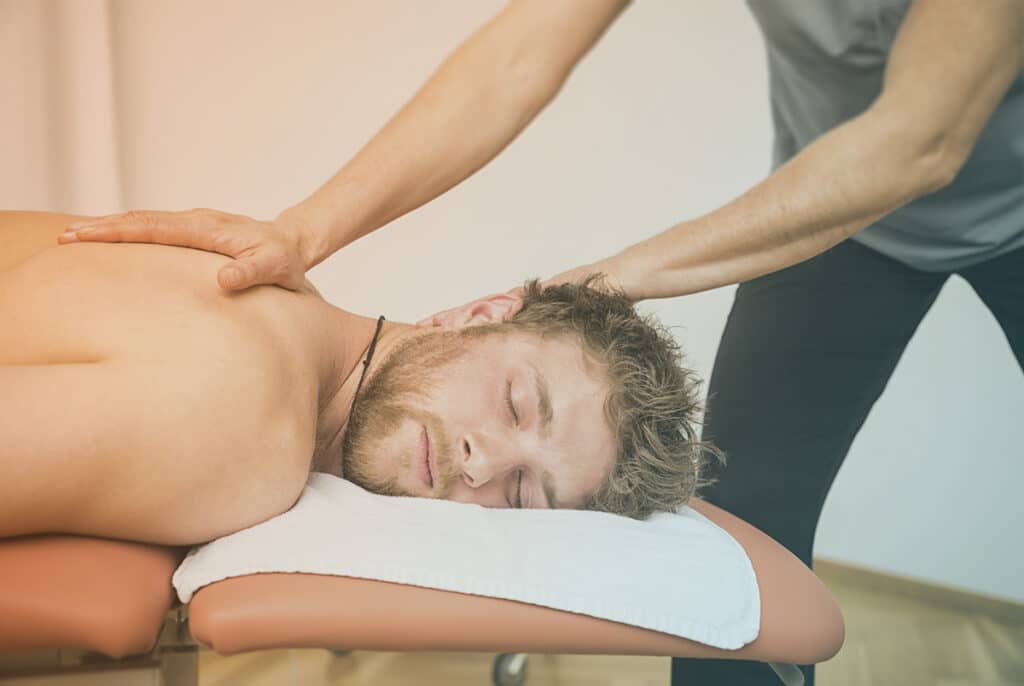
Massage therapy helps calm the mind by lowering cortisol levels, the body’s main stress hormone. As these levels drop, your nervous system shifts to a calmer state: breathing slows, your heart rate steadies, and muscle tension melts away.
It also directly supports emotional balance. Studies show that massage therapy can decrease stress hormones and boost serotonin, the feel-good chemical that improves mood, sleep quality, and anxiety management. Integrating massage therapy for stress management into your weekly or monthly routine is a simple, sustainable approach to physical and emotional well-being.

Muscle tension relief is one of the most immediate benefits of massage, helping your body feel looser and more mobile. When tight fibers relax, and blood flow improves, posture and everyday movement become easier.
Techniques like deep tissue, Swedish, and myofascial massage focus on restricted areas, easing strain and restoring flexibility so you can move freely.
Massage also supports individuals recovering from repetitive strain, intense workouts, or physically demanding jobs, preventing reinjury and encouraging better posture over time.
With consistency, massage therapy nurtures these long-term benefits:
By making regular massage a consistent part of your wellness plan, you can enjoy long-term health benefits, relief, enhanced vitality, and a higher quality of life.
For basic stress relief, getting a massage every one to two months is often enough to keep your body feeling balanced. If you’re dealing with chronic pain, train regularly, or live with high stress, weekly or bi-weekly sessions may provide better support. Ultimately, the ideal schedule depends on your health needs, lifestyle, and overall goals.
Deep tissue massage is one of the most effective techniques for muscle tightness. It uses slow, focused pressure to reach deeper layers of muscle and connective tissue, which can significantly help ease chronic pain, break down scar tissue, and reduce stubborn muscle tension and stiffness. This can help your body move more comfortably.
No, massage therapy should not replace medication for chronic pain or anxiety unless a healthcare provider specifically recommends it. It can be a powerful complementary therapy, but for more serious conditions, massage is most effective when paired with treatments like therapy, exercise, or medication.
Massage supports flexibility and mobility by releasing muscle tension, breaking down scar tissue and adhesions, and improving circulation. It also increases tissue elasticity and temperature, allowing muscles to lengthen and joints to move more freely with less pain and restriction.
Yes, many massage therapy benefits are scientifically supported. Research shows massage can measurably increase endorphins, lower cortisol, and boost circulation, which explains why people experience less stress and anxiety, better sleep, and reduced muscle pain.
Massage therapy benefits aren’t just about feeling good in the moment. It’s about building lasting comfort and resilience. Whether you’re seeking relief from muscle tension or support for long-term wellness, the proper approach can go a long way.
At Better Care Chiropractic and Physical Therapy, you’ll receive a personalized plan that combines massage therapy with chiropractic care. Guided by Dr. Farah’s expertise, patients receive personalized plans that address the root of discomfort and support long‑term health.
If you’re ready to explore what that looks like for you, book a consultation today for massage therapy in Montgomery and Willis.







Willis
804 W Montgomery St, Willis, TX, 77378
Montgomery
17099 Walden Rd Suite 100 Montgomery, TX. 77356